
(07) 4658 0600

IS DIESEL BECOMING A THING OF THE PAST?

Dec 7, 2022DCF, Featured, News

For those of you who, like us, spend huge amounts of time and money on spraying weeds, you will be well aware of the issues, costs and benefits of using diesel when basal bark spraying chemicals onto weeds.
 
The increased cost of diesel, along with its health and environmental issues has long made it a target for replacement however there has been little opportunity in the past.
 
This year, DCQ has a target of reducing internal diesel use on weeds by 250,000 L and a regional reduction through adoption of alternatives by 1,000,000 L.
 
To do this we have been accelerating the adoption of many technologies including misting, a technique that uses water, rather than diesel, and also working with chemical companies as part of the assessment for release of new chemicals.
 

New chemical that mixes with water

The most hopeful herbicide option has had some delays in supply, which has provided the opportunity for DCQ to further trials in preparation for permit applications through the chemical regulators. 
 
DCQ has already lodged three applications this year from its current R&D work, and new work will expand on that. The results to date from the testing is encouraging – a single pass of the misters using the new chemical on Prickly Acacia in a 400m depression line show an 80% kill the first instance. 
 
Additionally, a total of 97% of the trees were impacted so significantly that, if they weren’t killed, flowering and seed set was still disrupted. The density of the plants was over 800 stems/Ha.
 
For the plants killed, it equates to a cost of about ten cents per plant. That drops to 8 cents per plant when including all affected plants – a massive reduction in the costs of basal bark spraying with diesel, where each tree costs about $2.20.
 
This work will expand to additional sites and move to both Rubber Vine and Chinee Apple in the new year.
This kind of work, funded by the DCQ Foundation, may mean that diesel for weed spraying may become a thing of the past sooner than expected and focus will move to rangeland recovery, not just weed control.

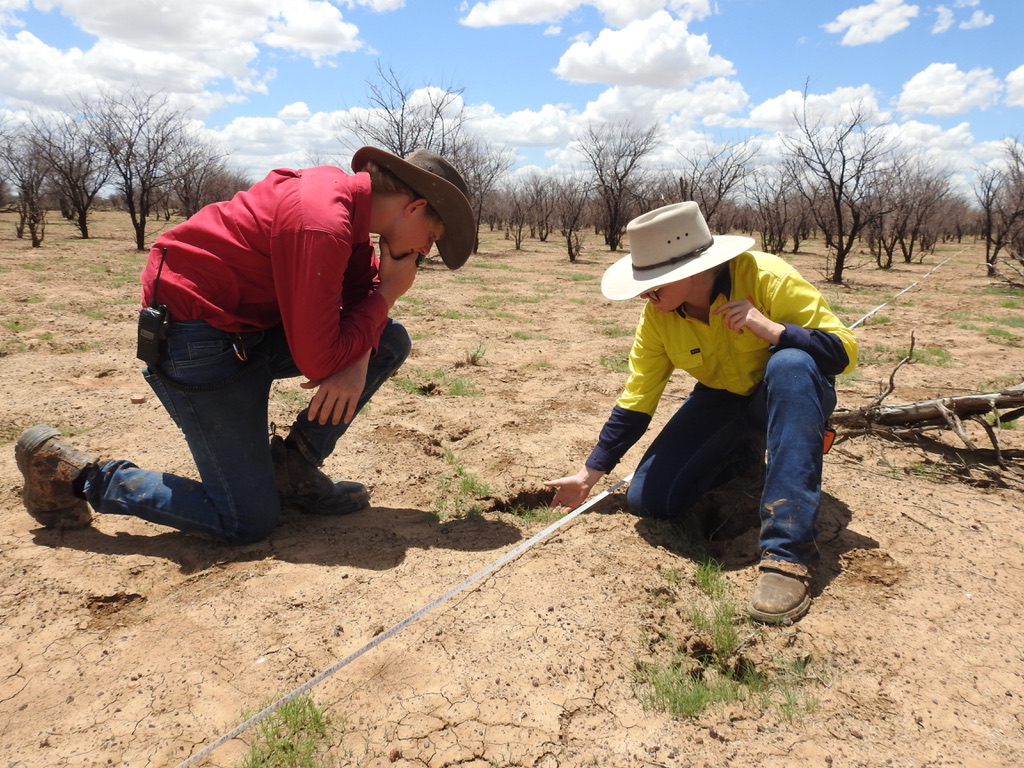
Dead Prickly Acacia trees in a line in a pasture in Western Queensland.

CITIZEN SCIENCE A WRAP

This project aims to build community understanding for our local environment and to spark an interest in science.

GIDYEA THICKENING

We talk to Doug and Lauren Tindall from Janet Downs and Gaza. They discuss the problems they are having with Gidyea Thickening, the commercial cost of the spread and what they do in an attempt to keep ahead of it.

SEEDY BUSINESS

Sometimes, even mother nature needs a hand. Having perfected Prickly Acacia control, we have begun seeding work to “turbo charge” pasture recovery.

How poly-pipe squares help assess land ‘bio-condition’ over time

A square plays a important role in capturing changes in NRM condition for several projects in the DCQ region.

Night parrot listed as ‘critically endangered’ as monitoring underway

An elusive, rare parrot in the Desert Channels region that was once thought to be extinct.

Free water quality testing of bores, springs in Western Queensland

Over the next 12 months, DCQ can test your bore or spring water quality at no cost.

Photos: Fast-moving bushfires a ‘real possibility’ in Western Qld this season

The Qld Rural Fire Service is concerned fires will be more dangerous than usual.

More funding to cap and pipe bores announced for Queensland

Up to 90% of your estimated eligible project costs could be covered. 

LANDCARE

Funded through the Australian Government’s National Landcare Program, the SAF is a trusted partner providing critical advice and extension services

Invasive Cactus

Cactus weeds have become more aggressive in our region due to climate shifts, drought and rainfall variability.

Waddy Trees

Occurring in isolated populations on the fringe of the Simpson Desert in inland Australia, the Waddi tree is one of the country’s rarest trees.

Land Condition

Restoring and revegetating bare ground country that has been barren for decades.

E-BEEF SMART FARM

A three-year project supporting primary-producers with technology to assist with timely and informed management decisions.

SEEDY BUSINESS

Sometimes, even mother nature needs a hand. Having perfected Prickly Acacia control, we have begun seeding work to “turbo charge” pasture recovery.

THORNVILLE QUANDARY

When pastures don’t return as expected.

THE TECH SAVY DESERT RAT

iPads are not just toys for us. They’ve become critical tools in recording our data and helping us to refine our mapping.

SUCCESS IN THE MAKING

With the summer rain, plants are now leaping out of the ground.