
(07) 4658 0600

TAKE HEED OF WEED SEED

Oct 31, 2022News

When should you watch for weeds in Western Queensland?

As a region, we have experienced some amazing rain the past few years – such a joy after so many years of drought.

However, rain will also bring a greater risk of weed growth.

The best time to act on that is “now”, during the wet season.

So, what can you expect?

For many of the weeds in our region, the lack of competition from years of drought will mean weeds are the first to “take off”.

Most often weeds will grow more quickly and race to set seed well before our native species, giving them a competitive edge long-term.

In 2022, we have seen a surge in tourists, scientists, adventurers and general visitors to the region and to properties, which means regular weed monitoring and control is the only way to curb any new infestations.

You should ensure any people who come onto your properly washes their vehicles and equipment down, and only stays within agreed areas.

Why it matters

The cost of weed control is only getting more expensive.

Landholders have a responsibility to control weeds, but everyone has a responsibility to ensure that we are not increasing risk or introducing weeds onto a property or into an area.

In Desert Channels Queensland project areas, you will start to see these signs appear.
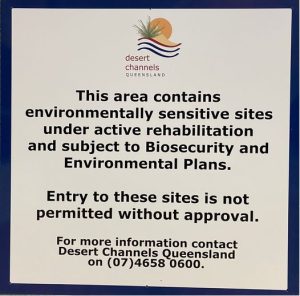
Significant public and private money is being invested to effectively manage our natural resources (soil, pasture, water, biodiversity), and while there is always an interest in these areas, it’s also important to remind visitors of their responsibilities.

Risks must be understood so investment is not undone.

Most of our weeds are easily transported by vehicles, so be careful you don’t leave a massive clean up bill for someone else next time you visit!

How poly-pipe squares help assess land ‘bio-condition’ over time

A square plays a important role in capturing changes in NRM condition for several projects in the DCQ region.

Night parrot listed as ‘critically endangered’ as monitoring underway

An elusive, rare parrot in the Desert Channels region that was once thought to be extinct.

Free water quality testing of bores, springs in Western Queensland

Over the next 12 months, DCQ can test your bore or spring water quality at no cost.

Photos: Fast-moving bushfires a ‘real possibility’ in Western Qld this season

The Qld Rural Fire Service is concerned fires will be more dangerous than usual.

More funding to cap and pipe bores announced for Queensland

Up to 90% of your estimated eligible project costs could be covered. 

Prickly Acacia

Funded by the Commonwealth Government, the project aims to improve property planning to ensure that the current threats to springs are reduced.

E-BEEF SMART FARM

A three-year project supporting primary-producers with technology to assist with timely and informed management decisions.

Waddy Trees

Occurring in isolated populations on the fringe of the Simpson Desert in inland Australia, the Waddi tree is one of the country’s rarest trees.

Emergency Plan

The BANC Emergency Preparedness and Response Plan outlines preparedness response and recovery actions for each asset with the aim of reducing the impact of catastrophic events.

Feral Pigs

Feral pigs devastate environmental, livestock and natural resources, and only a targeted and coordinated control effort will keep numbers down for good.

IS DIESEL BECOMING A THING OF THE PAST?

The increased cost of diesel, along with its health and environmental issues, has opened the door for a new kind of herbicide.

THE TECH SAVY DESERT RAT

iPads are not just toys for us. They’ve become critical tools in recording our data and helping us to refine our mapping.

THORNVILLE QUANDARY

When pastures don’t return as expected.

SUCCESS IN THE MAKING

With the summer rain, plants are now leaping out of the ground.

SEEDY BUSINESS

Sometimes, even mother nature needs a hand. Having perfected Prickly Acacia control, we have begun seeding work to “turbo charge” pasture recovery.