(07) 4658 0600

Free water quality testing of bores, springs in Western Queensland
Oct 9, 2025GAB, News

What’s in the water your stock are drinking?

A new project is available for landholders who want to test the quality of their spring or bore water in the Desert Channels region.

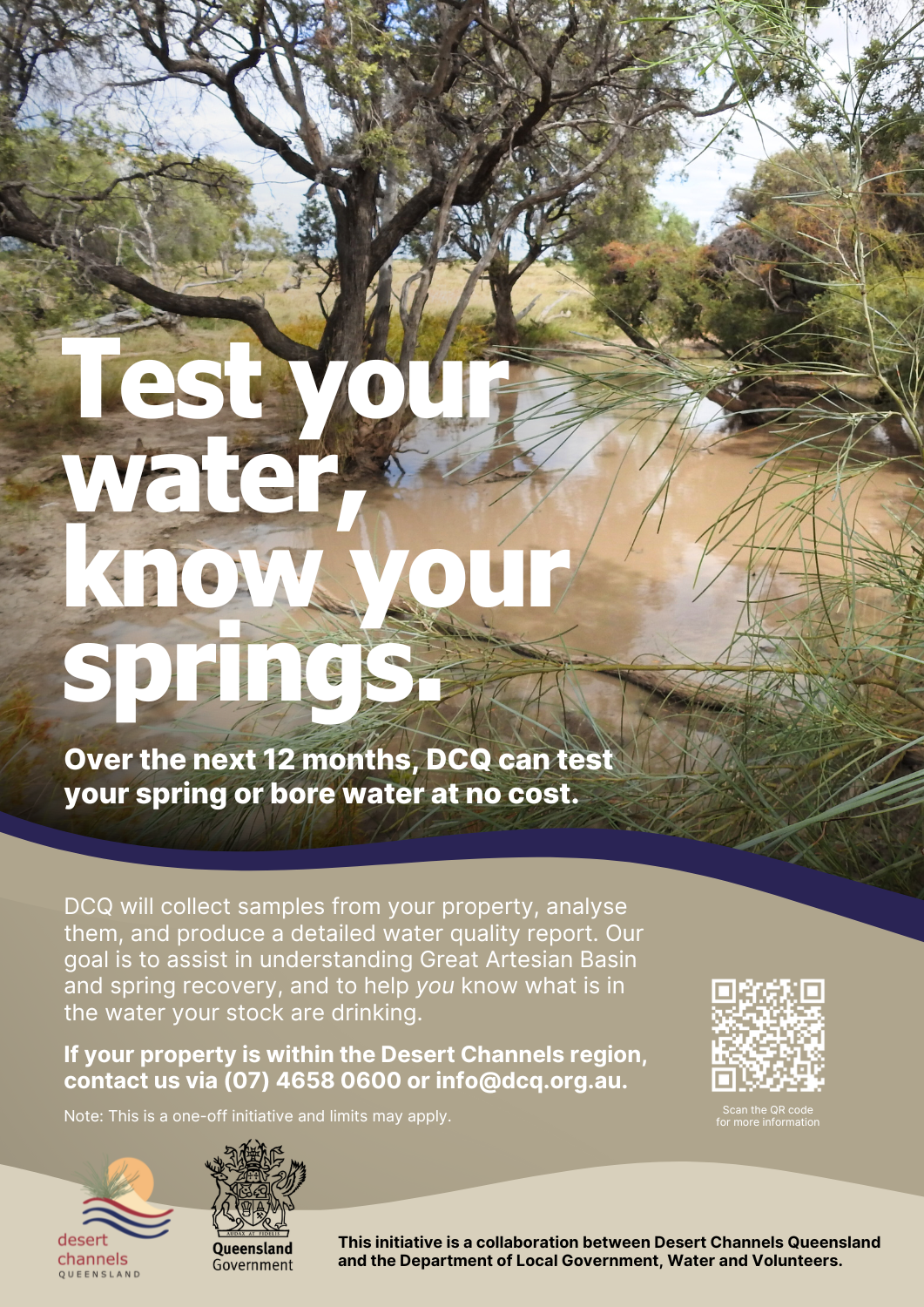
Over the next 12 months, DCQ staff are able to collect water samples from properties, analyse them, and produce a detailed water quality report for landholders.

We’ll do it at no cost to you.

The data will give you confidence on the composition of the water your stock are drinking, and assist our understanding of the recovery of the Great Artesian Basin.

Submit a request using the form below.

15 + 4 =

Frequently Asked Questions

Q: Who is eligible?
Properties in the Desert Channels region (i.e. the Queensland section of the Lake Eyre Basin) are eligible.

Q: What will I learn from a water quality test?
We will test the mineral content and salt levels of your water. These tests are useful because consumption of salt and minerals can positively (and sometimes negatively) impact the ability of your livestock to process feed and achieve live weight gain.

Q: How do I request a water quality test?
Contact a DCQ staff member using the form above. Alternatively, email us via info@dcq.org.au or call 07 4658 0600.

Q: How long do I have to request a test?
We can offer water quality testing until September 2026. Note: This is a once-off initiative and limits may apply, so get in quick.

Q: Who are you collaborating with?
This project is a collaboration between Desert Channels Queensland and the Queensland Government Department of Local Government, Water and Volunteers.

Q: Do you have a flyer?
Yes, you can download a flyer here and print it out.
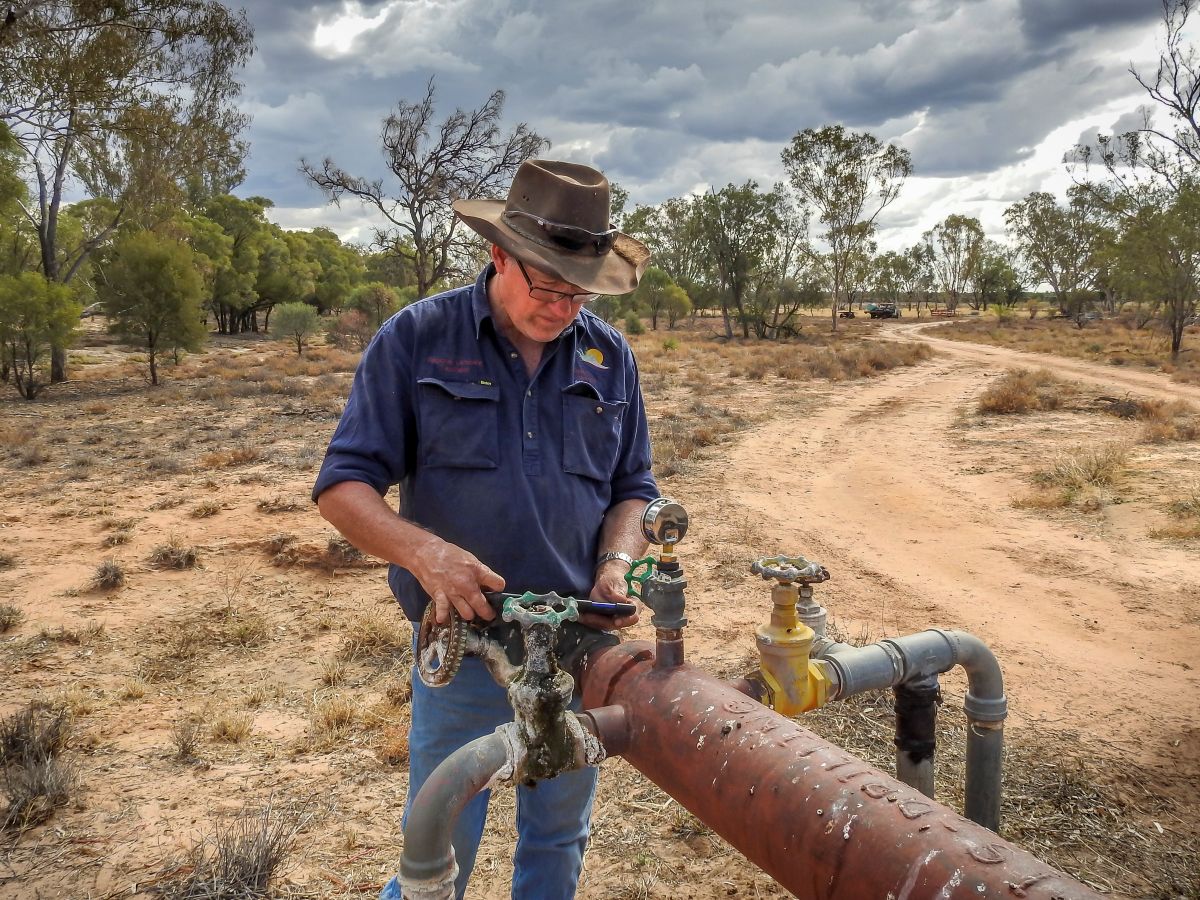
A DCQ staff member uses a small device to inspect a capped groundwater bore on a property in Western Queensland.
A flyer that says "Test your water know your springs" and provides information on how landholders can access free water quality testing in the DCQ region.

How poly-pipe squares help assess land ‘bio-condition’ over time

A square plays a important role in capturing changes in NRM condition for several projects in the DCQ region.

Night parrot listed as ‘critically endangered’ as monitoring underway

An elusive, rare parrot in the Desert Channels region that was once thought to be extinct.

Photos: Fast-moving bushfires a ‘real possibility’ in Western Qld this season

The Qld Rural Fire Service is concerned fires will be more dangerous than usual.

More funding to cap and pipe bores announced for Queensland

Up to 90% of your estimated eligible project costs could be covered. 

Emu chicks hatch and reveal ‘extraordinary’ role of emu dads

A rare moment caught on camera – emu chicks hatch in Western Queensland.

E-BEEF SMART FARM

A three-year project supporting primary-producers with technology to assist with timely and informed management decisions.

Springs

Lying beneath parts of the Northern Territory, Queensland, South Australia, and New South Wales, the Great Artesian Basin, (GAB) is Australia’s largest groundwater basin and one of the largest underground freshwater resources in the world.

Land Condition

Restoring and revegetating bare ground country that has been barren for decades.

LANDCARE

Funded through the Australian Government’s National Landcare Program, the SAF is a trusted partner providing critical advice and extension services

WATER QUALITY

This water quality project delivers a strategic approach to ensure clean water essential for community services. It also fosters improvements in waterway health.

SUCCESS IN THE MAKING

With the summer rain, plants are now leaping out of the ground.

THORNVILLE QUANDARY

When pastures don’t return as expected.

THE TECH SAVY DESERT RAT

iPads are not just toys for us. They’ve become critical tools in recording our data and helping us to refine our mapping.

SEEDY BUSINESS

Sometimes, even mother nature needs a hand. Having perfected Prickly Acacia control, we have begun seeding work to “turbo charge” pasture recovery.

IS DIESEL BECOMING A THING OF THE PAST?

The increased cost of diesel, along with its health and environmental issues, has opened the door for a new kind of herbicide.