
A New Way of Reading Country
In a Mitchell grass paddock in western Queensland, Desert Channels Queensland project officers trialled a new approach to land condition monitoring. Using the Land Condition Assessment Tool (LCAT) for the first time on Greening the Outback 3 participating properties, they explored how country responds to seasonal conditions and management decisions over time.
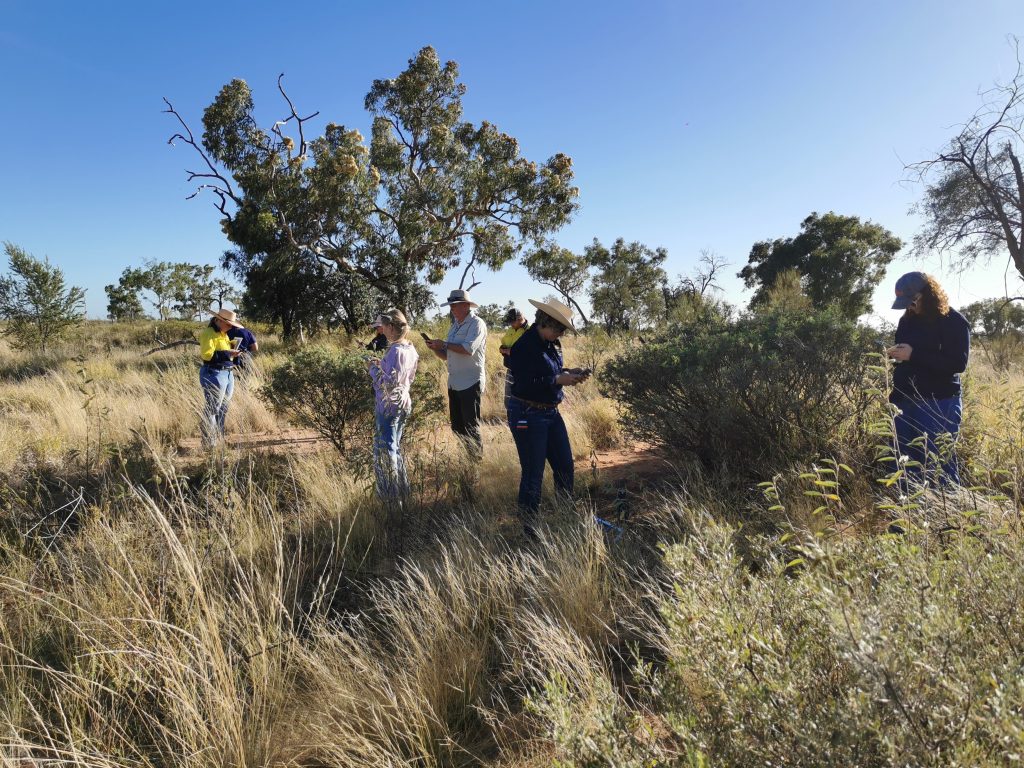
(Desert Channels Queensland staff practising LCAT monitoring techniques)
LCAT provides a structured, paddock-based approach to assessing land condition, including ground cover, pasture condition and landscape function. But beyond the data collected, the process is also creating opportunities for meaningful conversations about the management practices shaping the landscape.
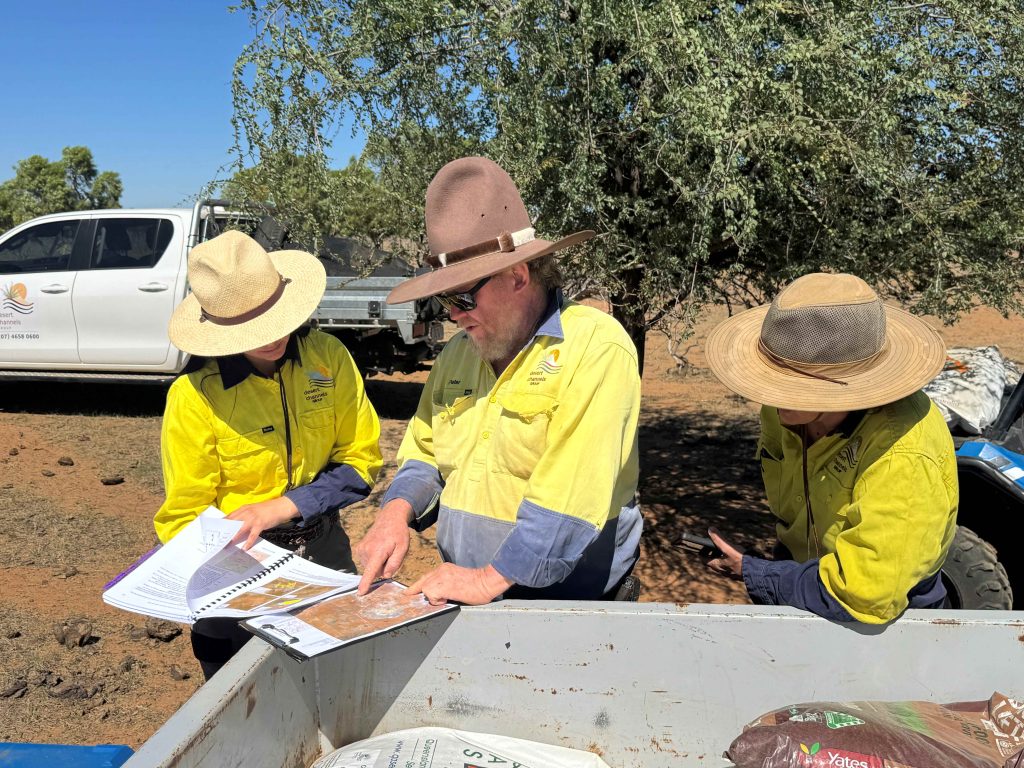
(Desert Channels Queensland staff undertaking LCAT field assessment on a participating property)
As assessments were completed, discussions naturally turned to the challenges and opportunities of managing country in a variable climate. Landholders shared their experiences navigating seasonal conditions and outlined the strategies they were using to support land condition and recovery. On some properties, this has included spelling paddocks, reseeding Mitchell grass and other pasture species, and allowing areas time to recover and rebuild ground cover.
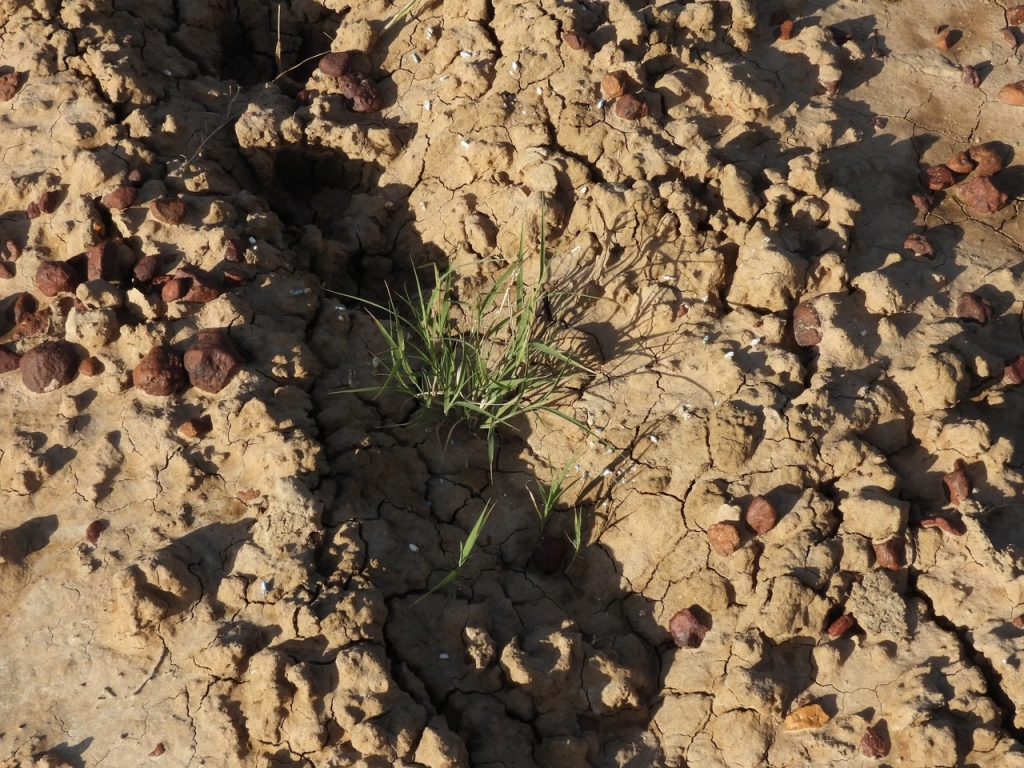
(Coated Mitchell grass seed used to improve grass cover at a participating property)
The monitoring process allows these management actions to be viewed through a consistent lens. Rather than relying solely on visual observations or photographs, LCAT provides a repeatable framework that can be revisited over time, helping landholders and project officers track changes and better understand how country is responding.
One of the participating landholders, Kale Robinson, sees particular value in returning to the same sites and measuring change over time.
“We’re interested to see what the October assessment shows. After spelling some areas and working on pasture recovery, it’ll be valuable to have a consistent way of measuring how the country is responding.” said Kale Robinson.
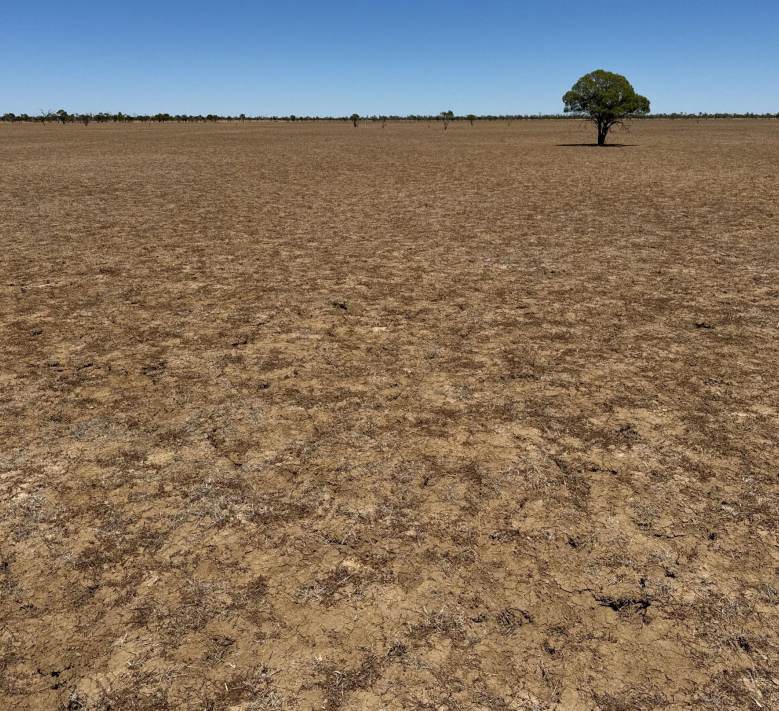
(Mitchell grass paddock under spelling and recovery on a participating property)
For Kale and other participating landholders, the story is only just beginning. Desert Channels Queensland project officers will return to participating properties in October to repeat LCAT monitoring and compare results with the initial assessments. These follow-up visits will provide valuable insights into how management actions, seasonal conditions and recovery efforts are influencing land condition across the project area.
While still in the early stages of implementation, LCAT is already demonstrating its value as a practical and repeatable monitoring tool. By helping connect on-ground management with measurable change, it has the potential to support more informed decision-making and strengthen the long-term resilience of Queensland’s grazing landscapes.
Greening the Outback 3 is funded by Queensland Government’s Natural Resource Management Expansion Program.