(07) 4658 0600

Things to know before you clear vegetation in Western Queensland
Aug 15, 2025News, Resources

When to clear, or not clear?

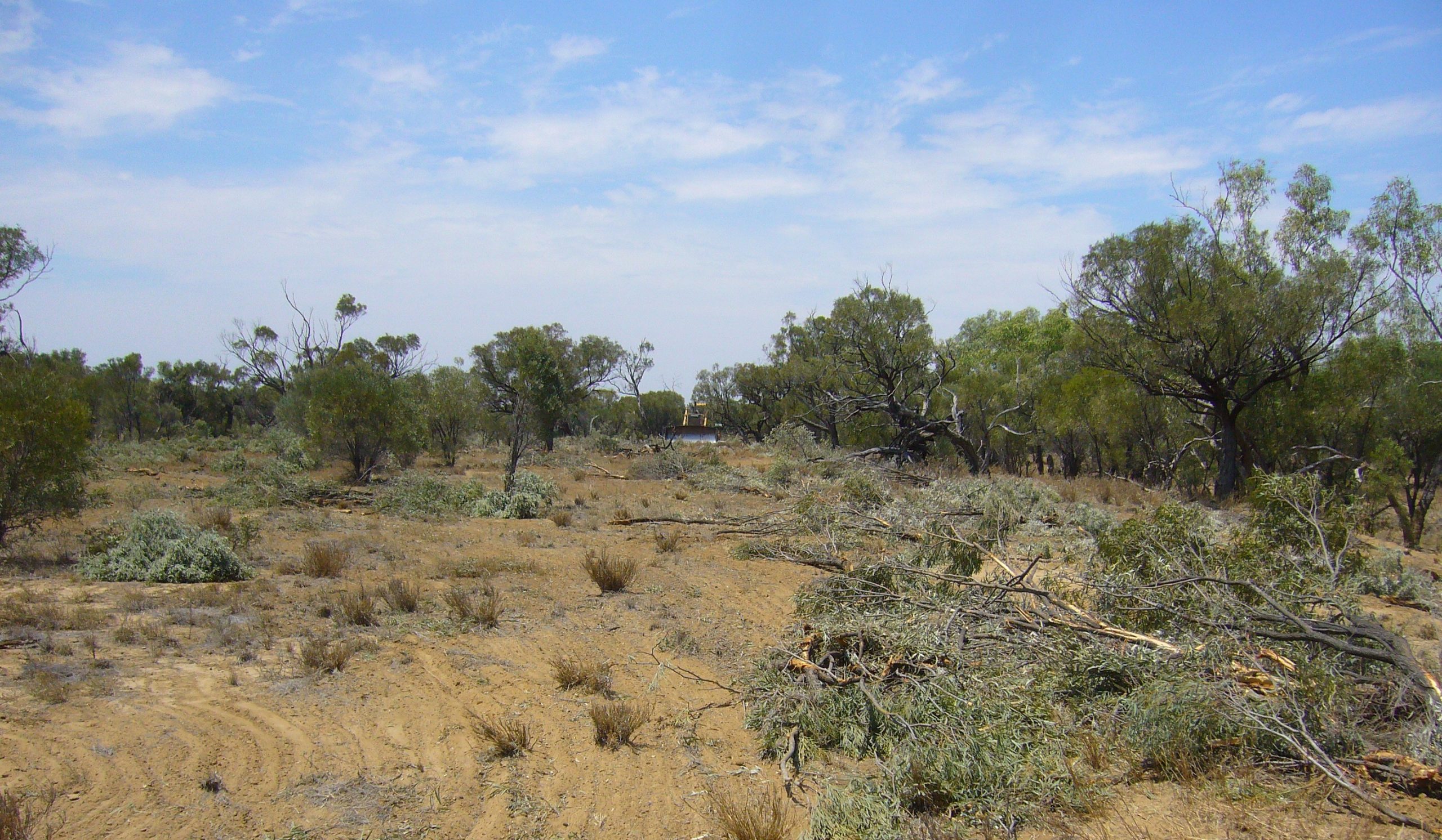
Thinking of clearing vegetation on your property? Before you start, it’s crucial to understand Queensland’s vegetation management rules.

Recently, staff from the Department of Natural Resources visited several towns in Western Queensland to provide specific vegetation support to landholders.

They explained some of the processes involved in getting approval to clear encroachment (e.g. gidyea) or regrowth, where to access free maps and where to access advice under the Vegetation Management Codes in Queensland.

In summary:

  • You can request a free vegetation map of your property or access online vegetation reports using Queensland Globe.
  • Always check your vegetation mapping and regional ecosystems – some zones have restrictions, while zones such as Category X have no state-level restrictions.
  • You can conduct clearing without approval in certain situations, such as to manage weeds, manage regrowth, manage encroachment or manage fire risk.
  • However, you must ensure your clearing is within legal limits and ecosystem boundaries, as there are usually restrictions on how much you can clear.

Things to remember before you clear

  1. Before undertaking vegetation clearing, you can contact the Veg Hub 13 58 34 or email vegetation@resources.qld.gov.au to get specific advice on what you can and can’t clear.
  2. Always check your vegetation mapping and regional ecosystems, as different zones have different restrictions and management requirements.
  3. Request a free vegetation map of your property or access online vegetation reports using Queensland Globe.
  4. Always provide clear instructions to the person undertaking the clearing activity and remember to keep records of clearing activities such as photos and diary notes.

Thanks to Karmen, Jules and Susie from the Queensland Government’s Veg Hub (13 58 34) who came along to give presentations.

Any landholders can call the Veg Hub between 9am and 4pm weekdays, and request to speak with any of these ladies to discuss specific vege-related questions

This page offers general information only. For up-to-date and specific advice, you should contact Veg Hub 13 58 34 or email vegetation@nrmmrrd.qld.gov.au.
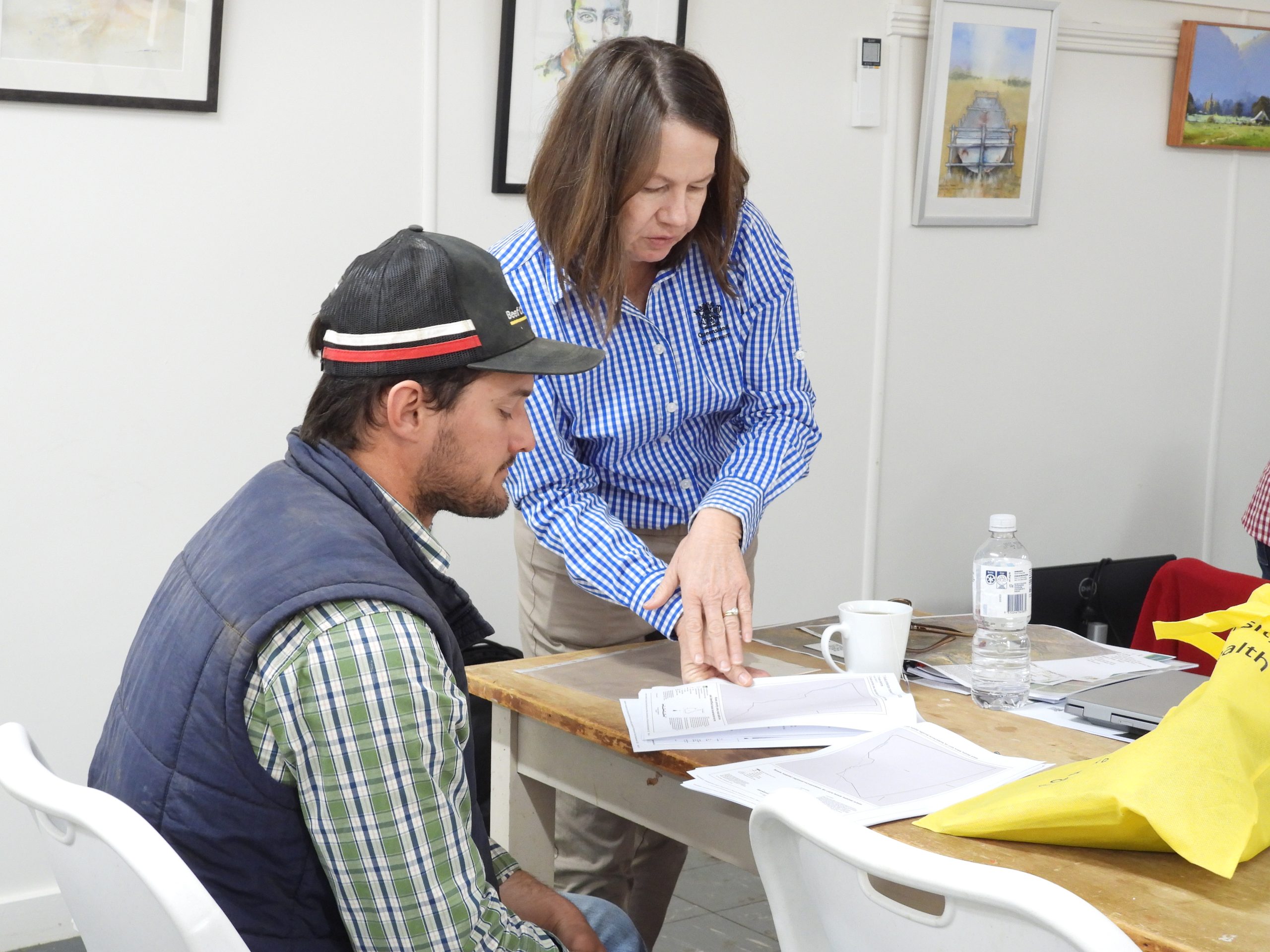
A women in a Queensland Government shirt helps a farmer holding papers understand their vegetation management codes.
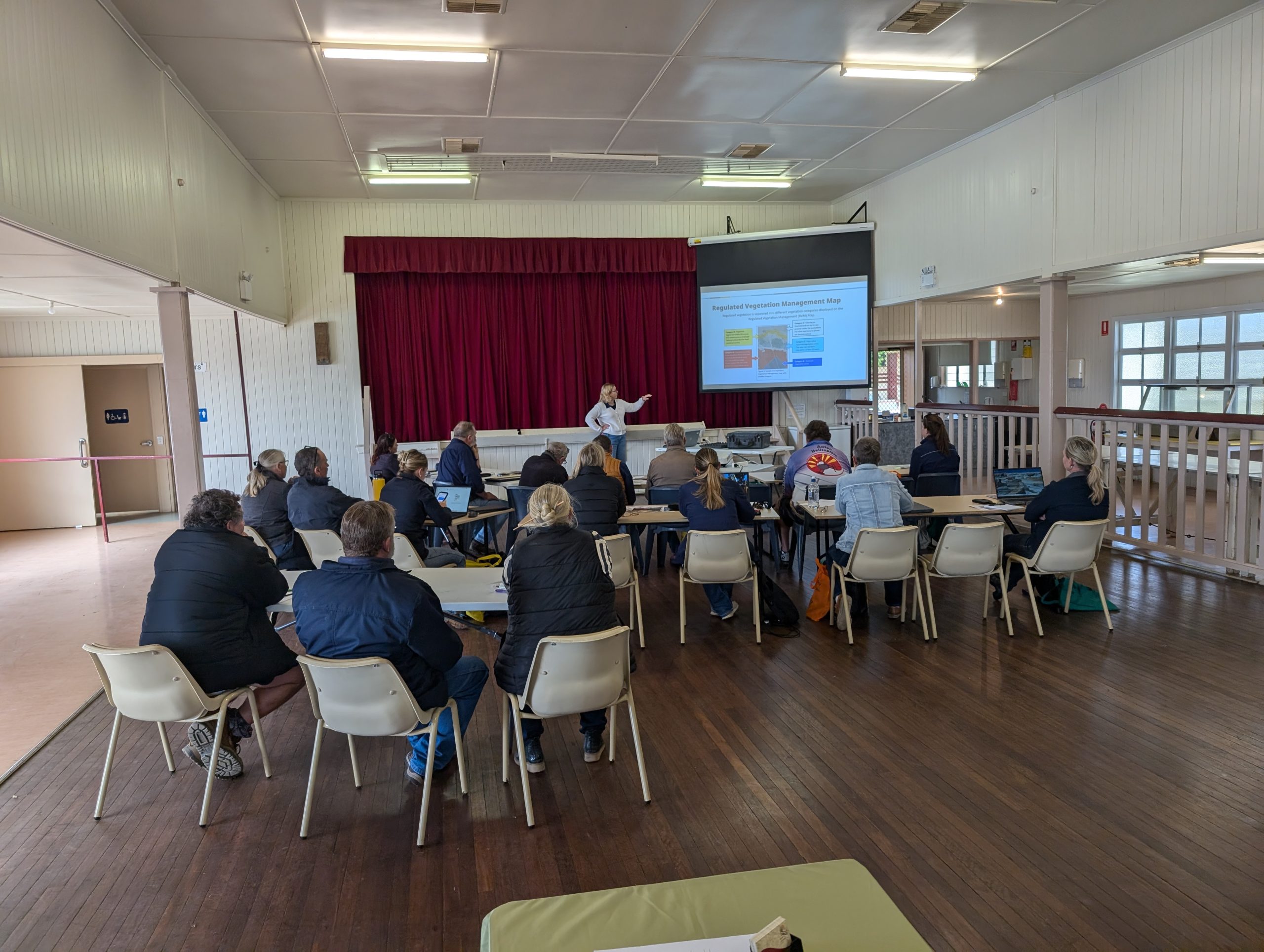
A crowd of landholders and contractors attend a workshop in an old-style town hall. On the project screen is a slide titled "Regulated Vegetation Map".
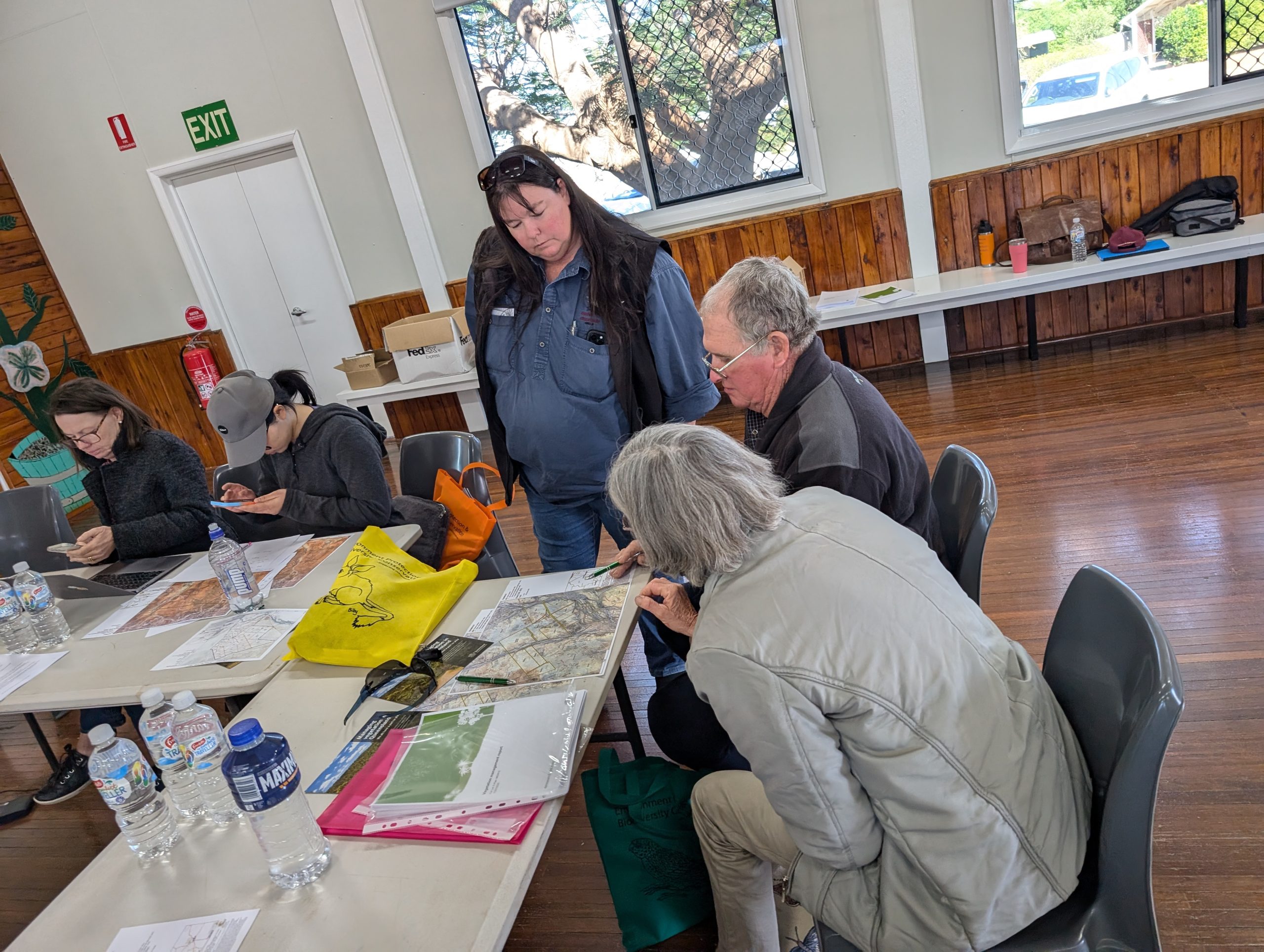
A DCQ staff member assists an older landholder couple who are holding several maps of their property.

Watertight

The Queensland Government has established the WaterTight program to be carried out by the Natural Resource Management groups

MAKING THE LAND MORE PRODUCTIVE: REHABILITATION AFTER DROUGHT

Controlling erosion and pasture rehabilitation: Daryl Hill gives practical demonstrations in workshops across the DCQ Region

Prickly Acacia

Funded by the Commonwealth Government, the project aims to improve property planning to ensure that the current threats to springs are reduced.

LANDCARE

Funded through the Australian Government’s National Landcare Program, the SAF is a trusted partner providing critical advice and extension services

Emergency Plan

The BANC Emergency Preparedness and Response Plan outlines preparedness response and recovery actions for each asset with the aim of reducing the impact of catastrophic events.

What is the grazing impact of cattle vs kangaroos?

Drones are used to investigate some of the most vexing questions for land management in our region.

Lambs Tail or Mulla Mulla? Wildflowers bloom in Western Qld

It may look like just another pretty wildflower, but it’s quietly transforming outback soils.

Herbicide trial underway to control ‘worst’ woody weeds

A herbicide that mixes with water instead of diesel is being tested on Parkinsonia, Mesquite and Prickly Acacia in the Desert Channels region.

GIDYEA THICKENING

We talk to Doug and Lauren Tindall from Janet Downs and Gaza. They discuss the problems they are having with Gidyea Thickening, the commercial cost of the spread and what they do in an attempt to keep ahead of it.

KOALA: A WELCOME RETURN…

At one of our work sites the DCQ field team and local landholders have been battling a huge infestation of rubber vine. This is the first time we have found a Koala in one of our work areas.

Free ‘half-day’ veg management & mapping workshops

Get your head around thinning, infrastructure, fire management and encroachment clearing codes in the Desert Channels region.

Bores and ‘bio-bugs’ at the Ayrshire Downs Field Day

Landholders gather at Ayshire Downs to discuss the latest DCQ projects from bore capping to bio-controls.

WATER QUALITY

This water quality project delivers a strategic approach to ensure clean water essential for community services. It also fosters improvements in waterway health.

HEAT

An environmental project focused on high value areas, properties that surround National Parks, or refugia that support crucial species migration in a changing climate.

Springs

Lying beneath parts of the Northern Territory, Queensland, South Australia, and New South Wales, the Great Artesian Basin, (GAB) is Australia’s largest groundwater basin and one of the largest underground freshwater resources in the world.

PACT

Funded by the Commonwealth Government, the project aims to improve property planning to ensure that the current threats to springs are reduced.

Land Condition

Restoring and revegetating bare ground country that has been barren for decades.

THE TECH SAVY DESERT RAT

iPads are not just toys for us. They’ve become critical tools in recording our data and helping us to refine our mapping.

SEEDY BUSINESS

Sometimes, even mother nature needs a hand. Having perfected Prickly Acacia control, we have begun seeding work to “turbo charge” pasture recovery.

THORNVILLE QUANDARY

When pastures don’t return as expected.

SUCCESS IN THE MAKING

With the summer rain, plants are now leaping out of the ground.

IS DIESEL BECOMING A THING OF THE PAST?

The increased cost of diesel, along with its health and environmental issues, has opened the door for a new kind of herbicide.